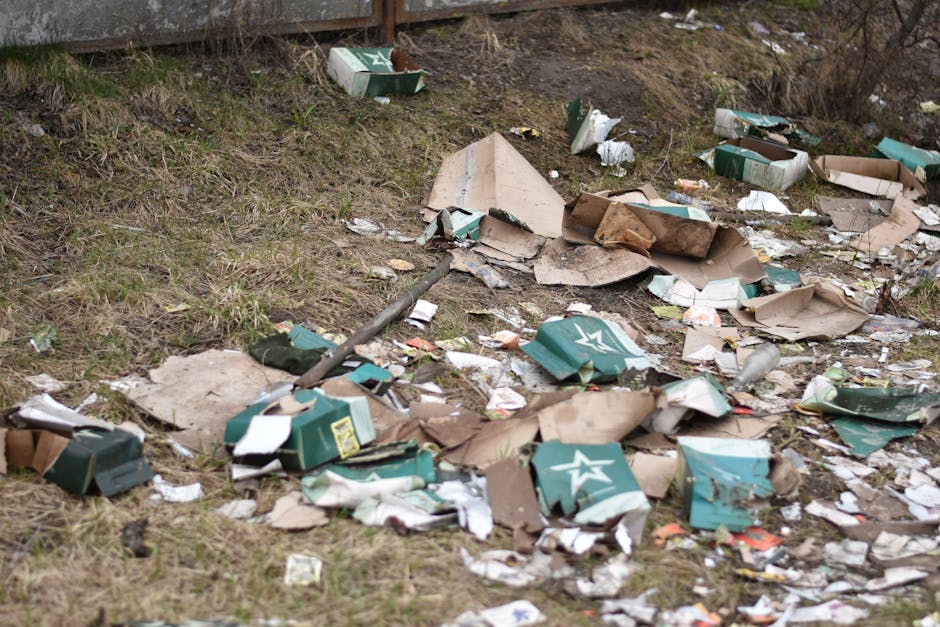
Fly-tipping near Ruislip Woods: report and remove

If you have spotted dumped sofas, black bags, broken boards, or builder's rubble near Ruislip Woods, you are probably dealing with more than an eyesore. Fly-tipping near Ruislip Woods can block paths, attract pests, and make a quiet green space feel neglected fast. The good news is that there is a sensible way to report and remove it without adding stress to your day.
This guide explains what counts as fly-tipping, why it matters in a wooded local setting, how removal usually works, and what to do if you need the mess cleared quickly. We will also cover common mistakes, practical checks, and the best next step if the waste is too large, awkward, or risky to handle alone. Let's face it, nobody wants to spend a Saturday morning staring at a pile of waste and wondering who's meant to deal with it.
Why Fly-tipping near Ruislip Woods: report and remove Matters
Fly-tipping is not just a nuisance; it changes how people use a place. Around a woodland edge like Ruislip Woods, dumped waste can spill into verges, footpaths, lay-bys, and hidden edges where people think it will go unnoticed. It rarely stays tidy for long. One mattress becomes two. A few sacks become a proper heap. Then the area starts to feel forgotten, which is a shame for residents, walkers, and anyone trying to keep the neighbourhood pleasant.
There is also a safety angle. Sharp metal, glass, syringes, nails, and unstable piles can injure children, dog walkers, maintenance staff, or anyone taking a shortcut. In damp weather, waste can become slippery and smelly too. That sounds obvious, but in real life people often underestimate how quickly a small dump turns into a broader mess.
Near woodland, there's another issue: wildlife. Food waste and loose bags can attract foxes, rats, gulls, and insects. Furniture or broken materials can also interfere with access for paths, verge maintenance, or seasonal works. If the rubbish includes soil, builders' waste, paint tins, or electrical items, the environmental risk goes up again.
So when people search for fly-tipping near Ruislip Woods: report and remove, they are usually looking for a simple outcome: who do I tell, what should I avoid touching, and how do I get this cleared properly? That is exactly the right mindset. Quick reporting plus proper removal is the cleanest route forward.
How Fly-tipping near Ruislip Woods: report and remove Works
The process is usually straightforward, even if the situation looks messy. First, assess the scene from a safe distance. You do not need to inspect every item closely. In fact, you probably should not. If it includes broken glass, needles, leaking liquid, or anything that smells chemical, keep back and avoid handling it.
Then the waste is reported to the relevant local authority route or landowner route, depending on where it sits. If it is on public land, it is usually a matter for the local council or the organisation responsible for that stretch of ground. If it is on private land, the landowner or managing agent normally has to arrange removal. That distinction matters more than people expect.
After reporting, the next part is removal. Small items may be collected by the responsible authority if they are eligible and accessible. Larger piles often need a dedicated clearance team, especially where access is awkward, the load is mixed, or the waste needs sorting. A professional clearance approach is often the simplest option for bulky fly-tipped items because it avoids multiple trips, lifting injuries, and the classic "we'll sort it out later" delay that never quite works.
In practical terms, a proper removal service should be able to handle mixed waste, separate recyclable materials where possible, and leave the area tidy. If the dump is close to a woodland track or rough verge, the team may need to bring smaller equipment or work in stages. That is normal. Woodland edges are not a warehouse loading bay.
For wider clearances after illegal dumping, some people also look at general waste removal when the mess is mixed and not limited to one obvious item. If the waste includes old furniture, there are also specific options such as furniture disposal and furniture clearance, which can be useful when the dumped items are awkward or heavy.
Key Benefits and Practical Advantages
Cleaning up fly-tipping quickly gives you more than a neat-looking verge or footpath. It can make a real difference to how the space feels and how people behave around it. Once rubbish is left in place, more rubbish tends to follow. That is one of those unfortunate local-life truths nobody likes, but it does happen.
Clear benefits include:
- Better safety: fewer sharp edges, trip hazards, and blocked access points.
- Less nuisance: reduced smells, pests, and mess spreading into surrounding greenery.
- Faster recovery: the area can return to normal use sooner.
- Lower stress: you are not left guessing who should move the waste or where to start.
- Better presentation: a clean edge to the woods helps the whole area feel cared for.
There is also a practical benefit for anyone managing property, premises, or shared land nearby. Prompt clearance reduces the chance of complaints, repeat dumping, or a growing backlog. In commercial settings, that can be especially useful because one neglected pile can create a poor impression very quickly.
If the dumped material came from a business, office, or works project, the right clearance route matters even more. For example, some waste may be better handled through builders waste clearance or business waste removal depending on what was left behind and how it needs sorting. A mixed dump is rarely one-size-fits-all.
Who This Is For and When It Makes Sense
This topic is relevant to more people than you might first think. It is not just for councils or landowners. Residents, walkers, local businesses, property managers, landlords, and site supervisors all run into fly-tipping issues now and then. Sometimes it is a single dumped chair. Sometimes it is a van-load of rubbish hidden just off the path. Either way, the question is the same: what now?
It makes sense to act quickly if:
- the waste is near a public path, woodland entrance, or roadside verge
- there are sharp, hazardous, or leaking items
- the pile is too heavy or awkward to move safely
- the rubbish appears to include construction debris, appliances, or furniture
- you are responsible for the land and need it cleared professionally
- the mess is attracting repeated dumping or anti-social behaviour
For homes and rental properties nearby, a fly-tip may also be a sign that your own stored waste or overflow rubbish needs a better system. In that case, a broader tidy-up through home clearance, house clearance, or even garage clearance can stop the problem from building again. Truth be told, clutter has a way of multiplying when no one is looking.
And yes, if it is a one-off incident you can deal with a one-off incident. But if you keep seeing rubbish in the same spot, that is a different conversation. Then you need a longer-term fix, not just a one-time lift and shift.
Step-by-Step Guidance
Here is a clear, practical sequence you can follow if you find fly-tipping near Ruislip Woods.
- Stay safe first. Do not touch unknown bags, liquids, needles, or electrical waste. Step back and look for obvious hazards.
- Take a quick note of the location. Be as specific as you can. A path entrance, boundary fence, or nearby landmark is usually more helpful than "near the woods somewhere."
- Photograph from a safe distance. A few clear photos can help identify the type of waste without putting you at risk.
- Check whether it is public or private land. That affects who should be informed and who arranges removal.
- Separate what you can describe, not what you can handle. For example: "three black sacks, a broken wardrobe, and paint tins." No need to empty bags or dig around.
- Report it to the responsible party. Use the proper local reporting route if it is on public land, or contact the landowner or managing agent if it is private.
- Arrange removal if required. If the waste is too large, mixed, or urgent, book a clearance team that can collect and dispose of it properly.
- Check the area after clearance. Make sure smaller fragments, broken pieces, or scattered rubbish have not been left behind.
- Prevent repeat dumping. Better lighting, clearer barriers, routine checks, and prompt clean-up all help.
For households or flat residents who want the mess removed alongside other unwanted items, flat clearance can be useful where access is tight, while loft clearance is worth considering if the issue is part of a larger declutter. A lot of fly-tipping starts with "we'll deal with it later" storage, and later arrives with a van.
Expert Tips for Better Results
In our experience, the best fly-tipping jobs are the ones that are approached calmly and methodically. Panic leads to rushed decisions, and rushed decisions tend to leave little bits behind. Those little bits matter more than people think.
Here are a few practical tips:
- Do not move mixed waste by hand unless you are sure it is safe. Hidden nails and broken glass love to ruin a good idea.
- Keep children and pets away from the area. That sounds obvious, but it is easy to forget when you are standing there thinking through the job.
- Ask for recyclable separation where possible. Wood, metal, cardboard, and some furniture can often be separated from general waste streams.
- Choose a team used to awkward access. Woodland edges, narrow paths, and uneven ground are not the place for guesswork.
- Book sooner rather than later. The longer dumped waste sits, the more likely it is to spread or be added to.
A small but useful habit: take a second look after rainfall or at dusk. Wet surfaces and fading light can hide broken fragments in grass or mud. It is the kind of detail people only notice once. Then they never forget it.
If the waste includes garden cuttings, fence panels, or hedge trimmings left where they should not be, a dedicated garden clearance can be more appropriate than a generic uplift. If it is mainly an office overspill or commercial dumping issue, office clearance or business waste removal may be the better fit.
Common Mistakes to Avoid
A lot of fly-tipping situations get worse because someone tries to solve the problem too quickly or in the wrong way. It happens. People mean well.
- Do not assume the waste is harmless. A bag can contain anything from household rubbish to chemicals or sharps.
- Do not break open bags. You gain very little and increase risk.
- Do not leave it "for a bit". Delay usually invites more dumping.
- Do not mix reporting with clearing. If the land responsibility is unclear, figure that out before moving waste around.
- Do not use an unverified clearance solution. Waste should go to a lawful, traceable destination.
- Do not ignore small spillages around the main pile. Loose debris is what often makes an area look worse even after the big items are gone.
One of the biggest mistakes is thinking every dumped pile can be lifted in one go with a couple of bin bags and a pair of gloves. Sometimes yes. Often no. And if a load includes plasterboard, rubble, fridges, mattresses, or bulky furniture, it is better handled as a proper clearance. That is simply the honest answer.
Tools, Resources and Recommendations
You do not need a van-full of equipment to deal with fly-tipping well. Usually, you need clear information, sensible photos, and the right disposal route. That said, a few items can make the process smoother.
- Phone camera: for safe distance photos and location reference.
- Notes app: to record what was dumped, where, and when you first noticed it.
- Gloves and sturdy footwear: only if you are handling small safe items and have permission to do so.
- Basic torch: useful for evening checks without stepping into the waste.
- Contact details for the land responsible party: handy if the site is private or shared.
For a more complete tidy-up, some readers find it useful to pair fly-tip removal with other clearance work. For example, after a garage has been used as a dumping point, garage clearance can reset the space properly. If the problem has spread across an entire property, home clearance or house clearance may be the cleaner long-term solution.
On the service side, it is worth checking a provider's approach to recycling and sustainability, along with practical details in health and safety policy and insurance and safety. Those pages are useful because they tell you how a provider thinks about risk, handling, and disposal-not just about lifting things away.
Law, Compliance, Standards, or Best Practice
Fly-tipping is not just a cleanliness issue; it is also a compliance issue. In the UK, waste must be handled and disposed of responsibly, and anyone arranging waste collection should be confident that it is going to the right place. You do not need to become a legal expert to make a sensible decision, but you do need to avoid casual shortcuts.
Best practice usually means:
- using a responsible collection route for the type of waste involved
- keeping separation clear for recyclable or reusable items where possible
- avoiding unsafe handling of unknown or hazardous materials
- making sure waste is transferred and disposed of lawfully
- documenting the issue if you are responsible for land or premises
If the rubbish appears to include hazardous items, contaminated materials, or electrical waste, caution matters even more. Do not make assumptions based on appearance alone. A neat-looking bag can still hide a nasty surprise, which is not exactly a fun plot twist.
Businesses and landlords should be especially careful, because repeat fly-tipping can become a management problem as well as a cleanliness problem. Setting clear collection routines, secure storage, and routine inspections helps reduce the chance of a reoccurrence. That is basic, but effective.
Options, Methods, or Comparison Table
There is more than one way to deal with dumped waste near Ruislip Woods. The right option depends on scale, location, and risk. Here is a simple comparison.
| Option | Best for | Strengths | Limitations |
|---|---|---|---|
| Report only | Small, clear, low-risk dumps on public land | Quick to start, minimal handling | May not be fast enough for urgent or awkward waste |
| Self-clearance | Very small safe items on land you control | Immediate action, low complexity | Risky for mixed, heavy, or contaminated waste |
| Professional waste removal | Bulky, mixed, or urgent fly-tipped waste | Safer, faster, usually tidier | Requires arranging a collection slot |
| Specialist clearance by item type | Furniture, garden waste, builders' waste, office waste | Better matching of crew and disposal route | May need more than one service if the waste is mixed |
If the pile is mostly wood, old planters, hedge cuttings, or broken outdoor materials, a targeted garden clearance may be all you need. If it is scrap, rubble, plasterboard, or renovation debris, builders waste clearance is usually the more sensible route.
Case Study or Real-World Example
Here's a very typical local scenario. Early one Monday, someone notices a dumped pile near the edge of a wooded footpath: two broken dining chairs, several black sacks, a damaged cabinet, and a few loose boards. The pile is not enormous, but it is awkward, and one of the sacks appears torn. There is also a faint smell of old food. Not ideal.
Rather than poking through the bags, the person takes a few photos from a safe distance and notes the nearest access point. Because the waste is close to a public route and looks mixed, the issue is reported first. A clearance is then arranged to remove the bulky items and sweep up the loose debris around them. The key win is not just that the main pile is gone, but that the small scattered pieces are picked up too. That is what makes the spot feel genuinely cleared.
A week later, the area still looks tidy because the remaining fragments were removed and the pile did not get a chance to spread. Small detail, big difference.
In another case, a property owner near the woods discovers that fly-tipped items were added beside an already cluttered side access. The solution is not only removing the dumped rubbish, but also using a broader loft clearance or furniture clearance to stop the property itself becoming the next overflow point. That kind of joined-up thinking saves hassle later.
Practical Checklist
Use this quick checklist if you find fly-tipping near Ruislip Woods and want to deal with it properly.
- Keep a safe distance.
- Check for hazards such as glass, needles, liquids, or electrical items.
- Take photos without entering the waste.
- Note the exact location and access points.
- Work out whether the land is public or private.
- Report it to the responsible party.
- Arrange removal if the pile is large, mixed, or urgent.
- Make sure loose fragments are cleared too.
- Ask about lawful disposal and recycling where relevant.
- Review whether the site needs a follow-up check to prevent repeat dumping.
Expert summary: The best fly-tipping response is simple: do not touch what you cannot safely identify, report it promptly, remove it properly, and then look at why it happened in the first place. Quick action helps, but tidy follow-through matters just as much.
Get a free quote today and see how much you can save.
Conclusion
Fly-tipping near Ruislip Woods is frustrating, but it does not have to turn into a bigger problem. With the right balance of safe reporting, sensible removal, and a little follow-up, the area can be restored quickly and properly. That is good for residents, good for visitors, and good for the woodland edge itself.
If you are dealing with a bulky pile, mixed rubbish, or a location that is awkward to access, the smartest move is usually to bring in a clearance service that can handle the job in one clean pass. It saves time, reduces risk, and stops the mess from hanging around longer than it should. And honestly, that relief when the space is finally clear? Very real.
For a company overview, you can also read more about our approach and check pricing and quotes if you are planning the next step. If you are ready to move forward, get in touch and let the job be dealt with properly.
Sometimes the best local improvement is simple: clear it, report it, and give the place a fresh start.
Frequently Asked Questions
What counts as fly-tipping near Ruislip Woods?
Fly-tipping is the illegal dumping of waste on land that is not licensed or intended for that waste. Near Ruislip Woods, that can include black bags, furniture, rubble, appliances, garden waste, or broken household items left on verges, tracks, or woodland edges.
Should I touch the dumped waste to see what it is?
No. If you do not know what is inside a bag or pile, leave it alone. Some waste hides sharp objects, chemicals, needles, or contaminated materials. It is better to note what you can see from a safe distance and report it.
Who do I contact to report fly-tipping?
That depends on whether the waste is on public land or private land. Public land is usually reported to the relevant local authority route or responsible land manager. Private land is normally the responsibility of the landowner or managing agent.
Can I remove fly-tipped waste myself?
Only if it is small, safe, and clearly within your control. If the waste is heavy, mixed, sharp, or potentially hazardous, professional removal is the safer option. A quick tidy-up can become a nasty injury if you guess wrong.
What if the fly-tip contains old furniture?
Bulky furniture is often best handled through a furniture-specific clearance route. Depending on what was dumped, furniture disposal or furniture clearance may be more suitable than a general pickup.
Is fly-tipping dangerous in woodland areas?
Yes, it can be. Woodland edges often have uneven ground, hidden debris, and limited lighting. Add in glass, metal, or leaking waste and the risk goes up. It can also attract pests and make paths less pleasant for walkers and families.
How quickly should fly-tipped waste be removed?
As quickly as possible, especially if it blocks access, smells, attracts animals, or includes hazardous items. The longer it stays, the more likely it is to spread or encourage more dumping nearby.
What is the best service for mixed fly-tipped rubbish?
A general waste removal service is often the best fit for mixed rubbish. If the items are mostly from one source, such as a renovation or office clear-out, a more specific service may be better.
Can fly-tipping happen on private land too?
Yes, very often. Private land near busy paths or hidden access points can be targeted because it looks less supervised. In those cases, the landowner or responsible occupier usually needs to arrange removal.
Will the waste be recycled where possible?
That depends on the make-up of the load and the provider's sorting process. Good practice is to separate reusable or recyclable materials where feasible. If sustainability matters to you, check the provider's recycling and sustainability approach.
What should I do if the waste keeps coming back?
Repeat dumping usually means the site needs more than one clean-up. Better lighting, routine monitoring, access control, and prompt removal all help. If the same spot keeps attracting waste, look at the layout as well as the clean-up.
How do I know a clearance company is suitable for this kind of work?
Look for clear safety practices, sensible handling procedures, and an approach that covers disposal properly. Pages such as insurance and safety and health and safety policy are useful indicators of how the business operates behind the scenes.
Can fly-tipped waste near the woods be part of a bigger declutter problem?
Absolutely. A lot of fly-tipping starts with overflow from a home, garage, loft, or business unit. If you are clearing a wider mess, services such as garage clearance, loft clearance, or office clearance may be part of the fix.
Is it worth asking for a quote even for one dumped pile?
Yes, especially if the pile is bulky or awkward. A quick quote can tell you whether the job is simple or whether it needs more careful planning. It is usually better to ask early than to let the issue sit and grow into a bigger headache.